
Plantation Teak
The fence that outlasts the house.
Tectona grandis · Costa Rica · Kiln-dried
1,155 lbf Janka hardness. Built-in Tectoquinone. Plantation-grown, zero chemical treatment required.
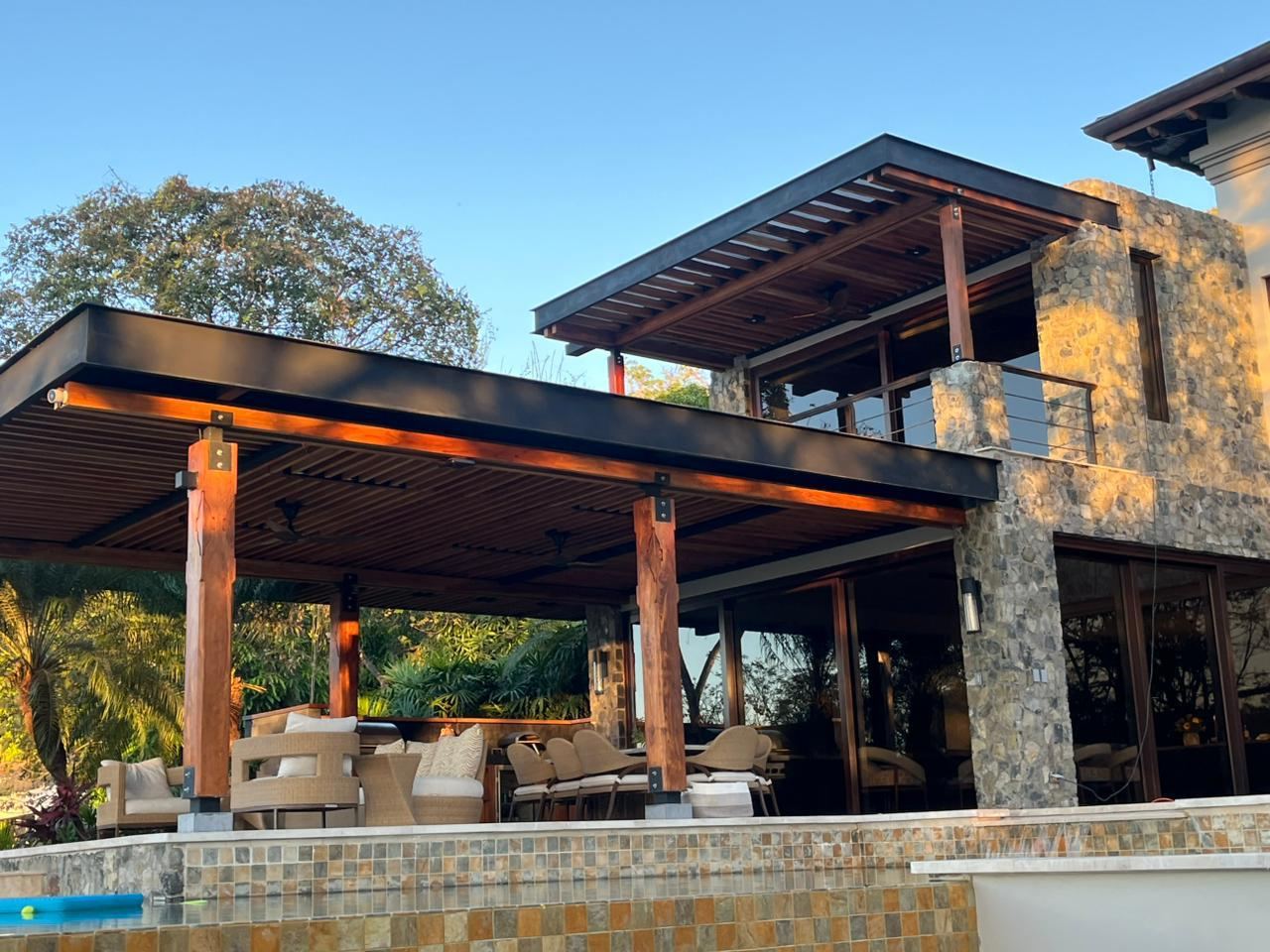
The Chemistry
Why teak doesn't need treatment.
Teak is one of a small number of species that contains Tectoquinone — a naturally occurring naphthoquinone compound that makes the wood chemically hostile to rot, fungi, and insects. This isn't marketing. It's a documented phytochemical property.
Combined with a natural oil matrix and approximately 1% silica content by weight, the result is a wood that repels moisture at the cellular level, resists abrasion from the same silica that dulls saw blades, and requires zero topcoat treatment to outlast cedar by decades.
The 2.5% radial shrinkage coefficient — among the lowest of any commercial hardwood — means no seasonal gapping, no warping under moisture changes. The fence you install in April will be dimensionally identical in January.
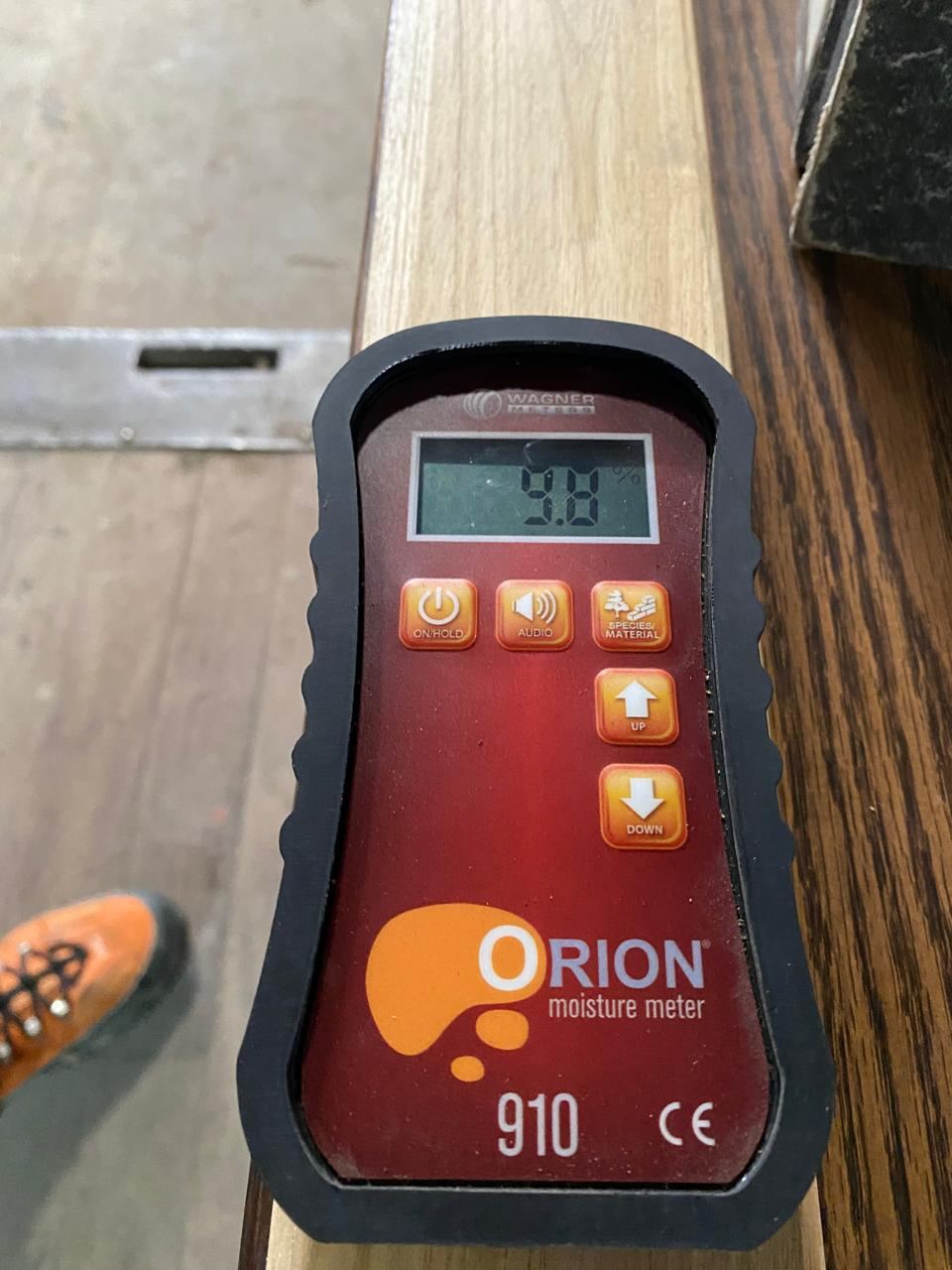
Harder than black walnut (1,010 lbf). Comparable to English oak. The denting resistance that cedar (350 lbf) simply doesn't have.
The same silica that dulls your saw blades is what makes this fence outlast the house. Grain hardness at a molecular level.
Among the lowest of any commercial hardwood. No gapping between boards, no seasonal movement, no callbacks.
Performance Properties
What you're buying.
Built-in moisture barrier
Tectoquinone and natural oil matrix create a moisture barrier at the cellular level. Zero chemical treatment required in any climate — indoor, outdoor, or marine-adjacent.
Dimensional stability
2.5% radial / 4.0% tangential shrinkage. Install tight — no seasonal gapping. No warping, no cupping. The spec you write in the estimate stays true on the fence line.
Abrasion and surface hardness
Silica content (~1%) hardens the grain against surface wear, UV, and weathering. The same property that dulls saw blades gives you a surface that weathers rather than degrades.
Track record in harsh environments
Royal Navy shipbuilding material for generations. Still specified for superyacht decking, marine piers, and dock boards where saltwater exposure is daily. Iowa winters are comparatively gentle.
Grade Guide
Know what you're specifying.
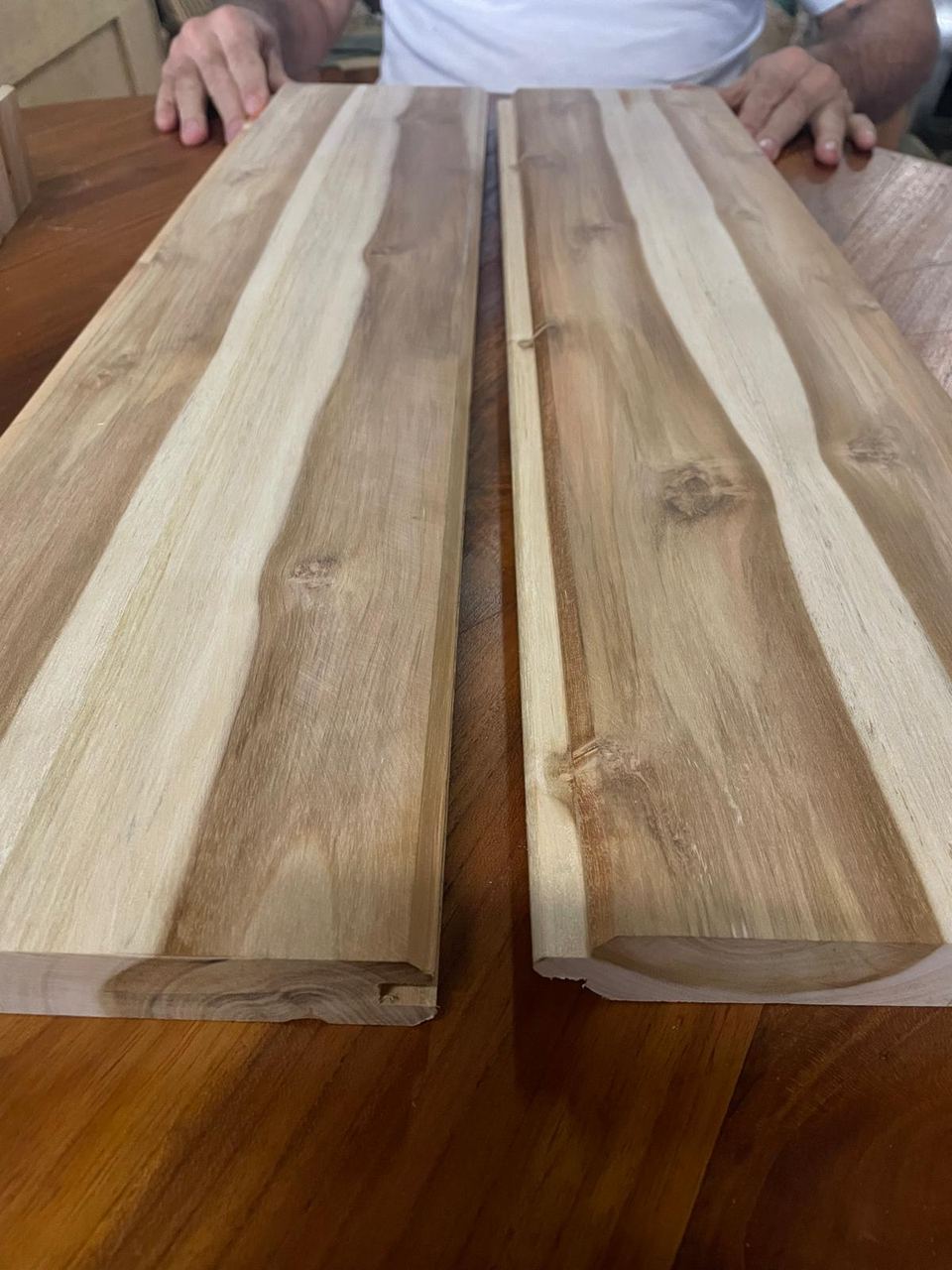
Teak grades are primarily about heartwood content, oil percentage, and grain uniformity. FEQ is the tightest spec — 100% heartwood, architect-grade uniformity. Select/Better is the trade's best value. Standard is character-grade for volume applications.
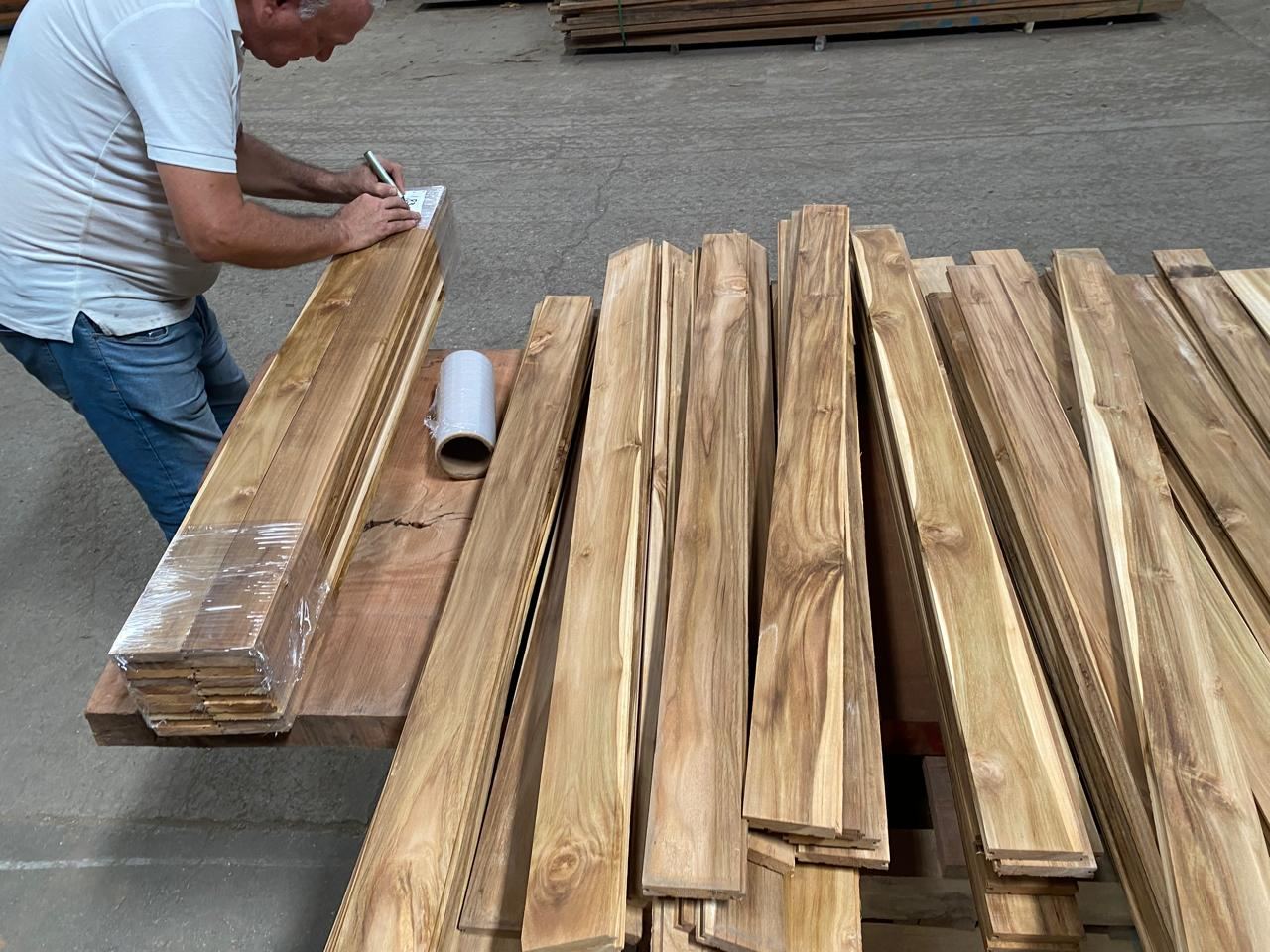
We stock to order. Tell us the grade, the dimension, and the application — we'll source to your spec from our Costa Rican supplier and provide documentation.
| Grade | Specification |
|---|---|
| FEQ First European Quality | 100% heartwood. Tight, straight grain. Uniform amber color. Highest oil content. Architect-specified for gates, entry features, and exposed architectural cladding where uniformity is non-negotiable. |
| Select / Better | Predominantly heartwood. Small sound knots permitted. Best price-to-performance ratio for the trade — ideal for exterior cladding, premium decking, and horizontal fencing. |
| Standard | Character-grade. Natural color variation and occasional knots. Best for volume fencing, landscaping, and applications where the install will be oiled or stained. |
Where It Performs
Applications and use cases.
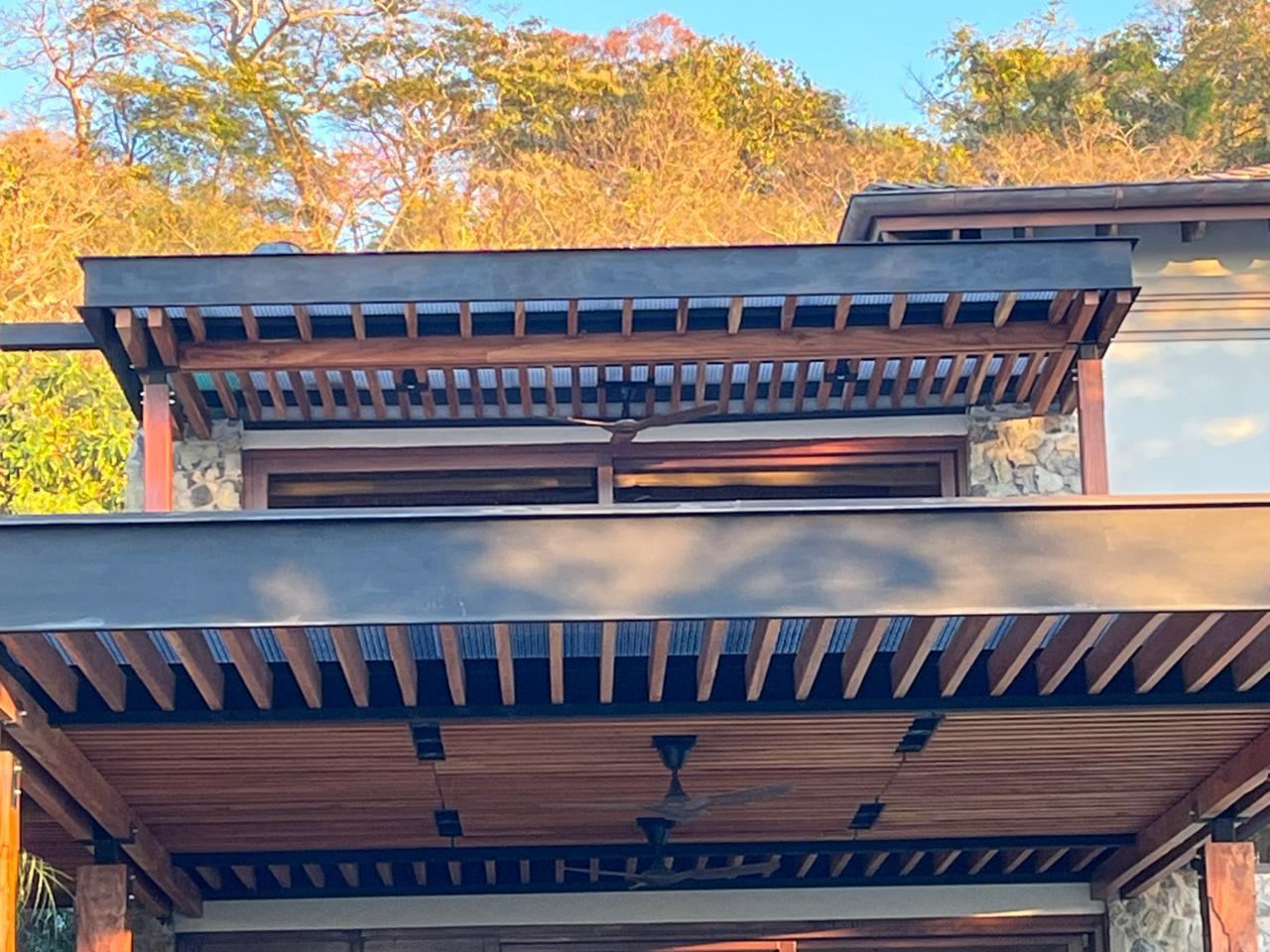
- Horizontal privacy fencing — residential, commercial, and hospitality
- Gate and entry panels — driveway gates, courtyard screens, architectural features
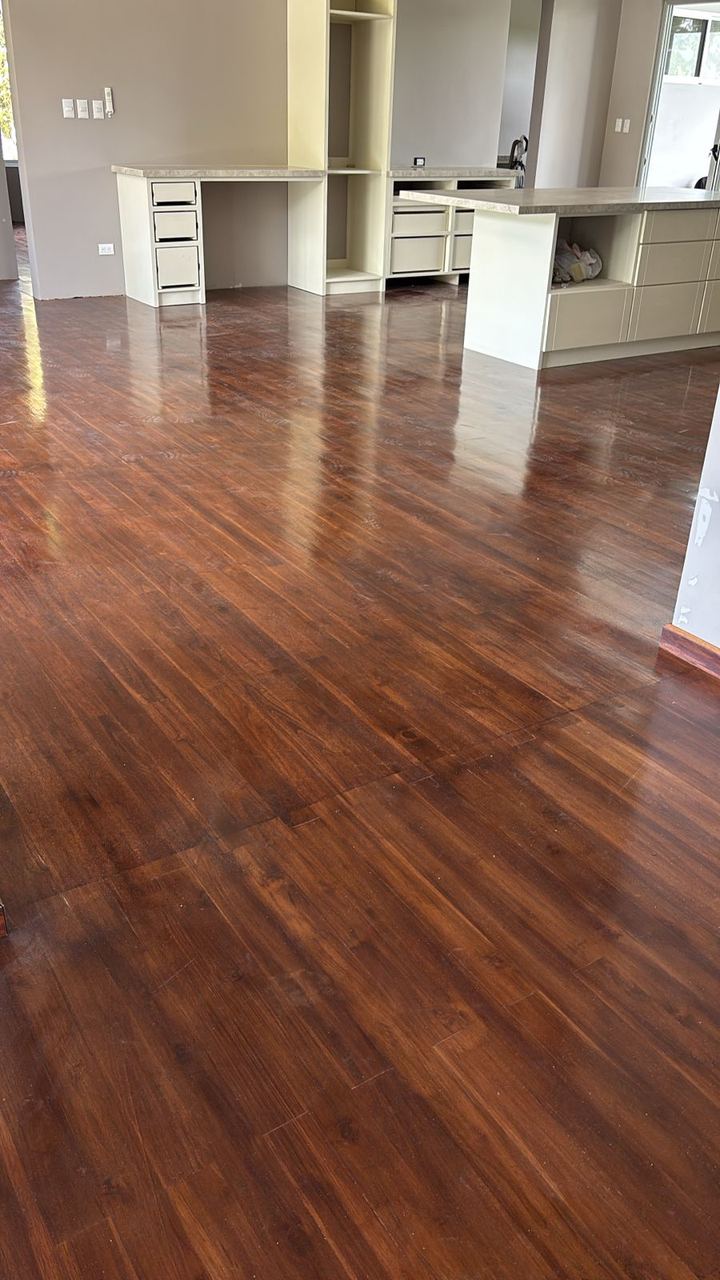
- Deck and dock boards — above-grade and marine-adjacent applications
- Sauna and spa interiors — walls, benches, and floors in high-humidity environments
- Interior accent walls and statement cladding
- Custom millwork and architectural S4S stock
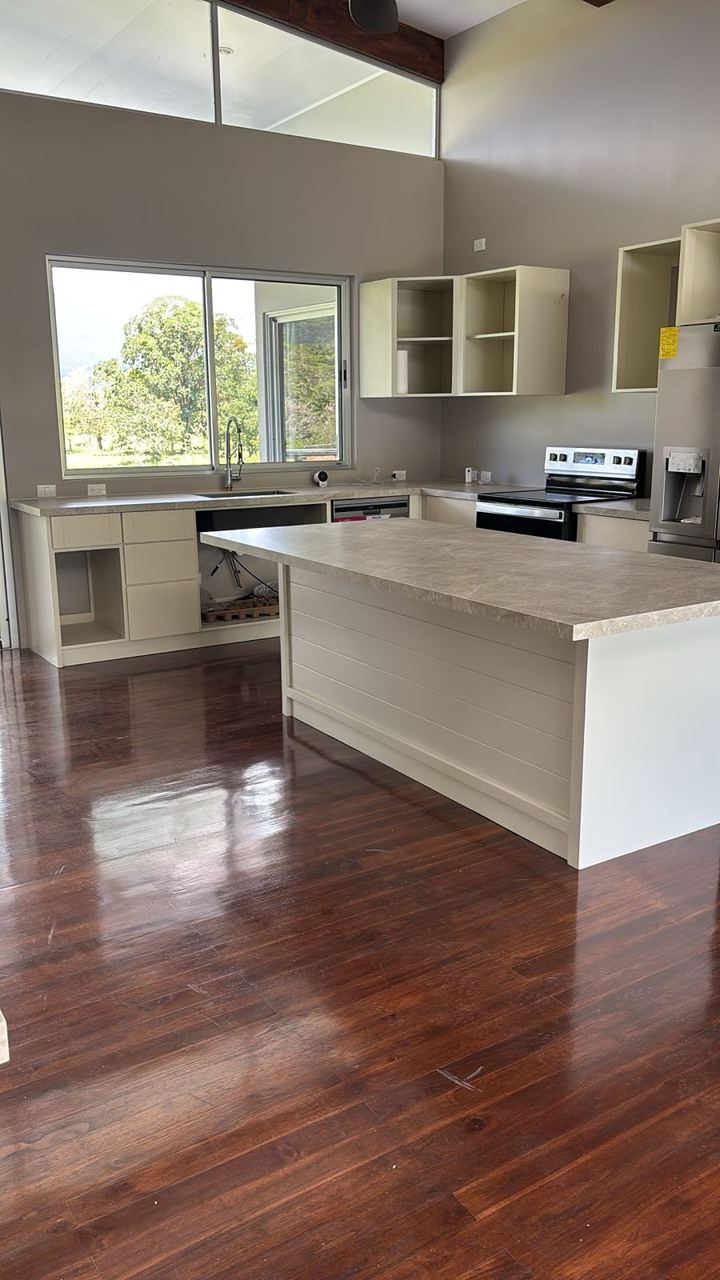
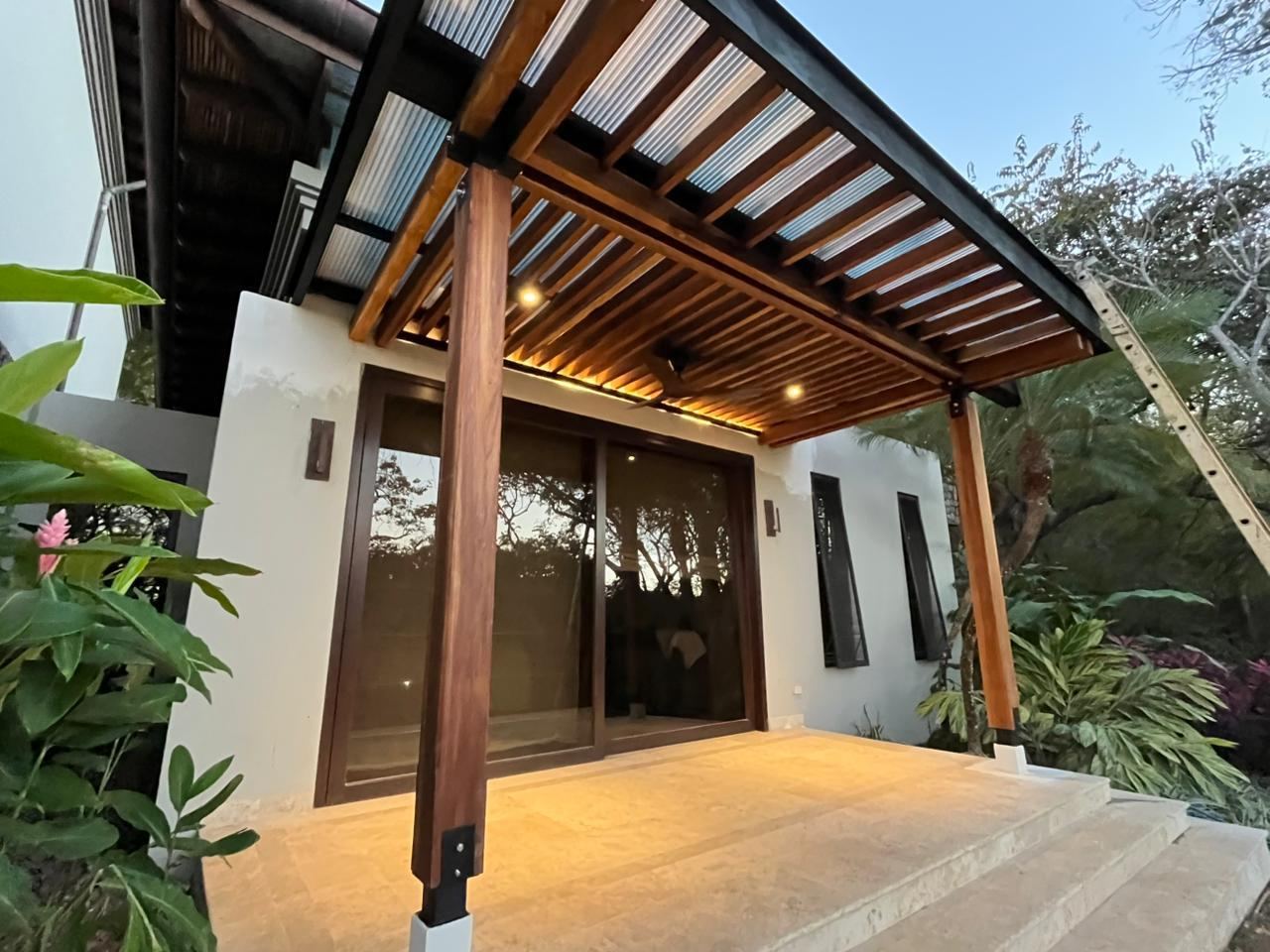
Teak is not appropriate for ground contact without supplemental drainage. All exterior teak benefits from an initial oiling to direct the patina — silver if left raw, amber if maintained. Either is a legitimate choice; agree with your client before install.
Request a teak spec sheet and sample kit.
Fill out the trade inquiry form — we'll respond within one business day with grade options, dimensions available, and a pricing conversation.